Saviour
A novella in the Lem tradition.
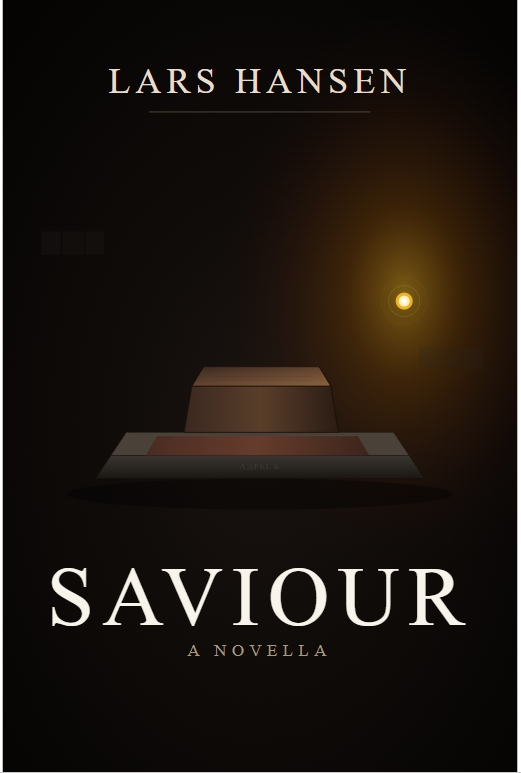
A historian traces a Bronze Age artefact to an Old Believer community on the Danube Delta. The community has held it for one hundred and thirty-seven years. The artefact was made for a mind that does not yet exist.
In a basement archive on Furmanov Street in Almaty, a historian named Marta Lem opens a forty-three-year-old box of papers that have never been catalogued. The box contains the journals of Pyotr Aleksandrovich Vyshnegradsky - an Imperial Russian geographer who died, with his wife, of an unexplained neurological disorder in 1884, in the months after he brought an anomalous artefact home from a Bronze Age burial in the Altai. The journals trace the artefact's movement, after Vyshnegradsky's estate sale, into the hands of a Lipovan Old Believer trader on the Danube Delta. The community there has been holding it ever since.
Saviour is a novella in the Lem tradition. It follows Marta across the years she spends earning her way into the Lipovan community at Vilkovo, the ritual by which she is admitted to know what they have been holding, and the structural pressure that builds when the wider world begins to take an interest in their secret. The artefact at the centre of the novella is a slab of crystalline substrate whose surface - looked at long enough - installs its structure directly into the looker's neural architecture, and whose neural architecture is then no longer that of a member of our species. Brief looking, the Lipovan tradition has discovered, is survivable. Long looking is not.
For the conceptual framework that underlies this novella, see What drives the stories.