A rotating selection of astrophotography from my observatory – galaxies, nebulae, clusters, and the occasional special event. Ten images at a time, refreshed every week, drawn from a growing archive of 56.
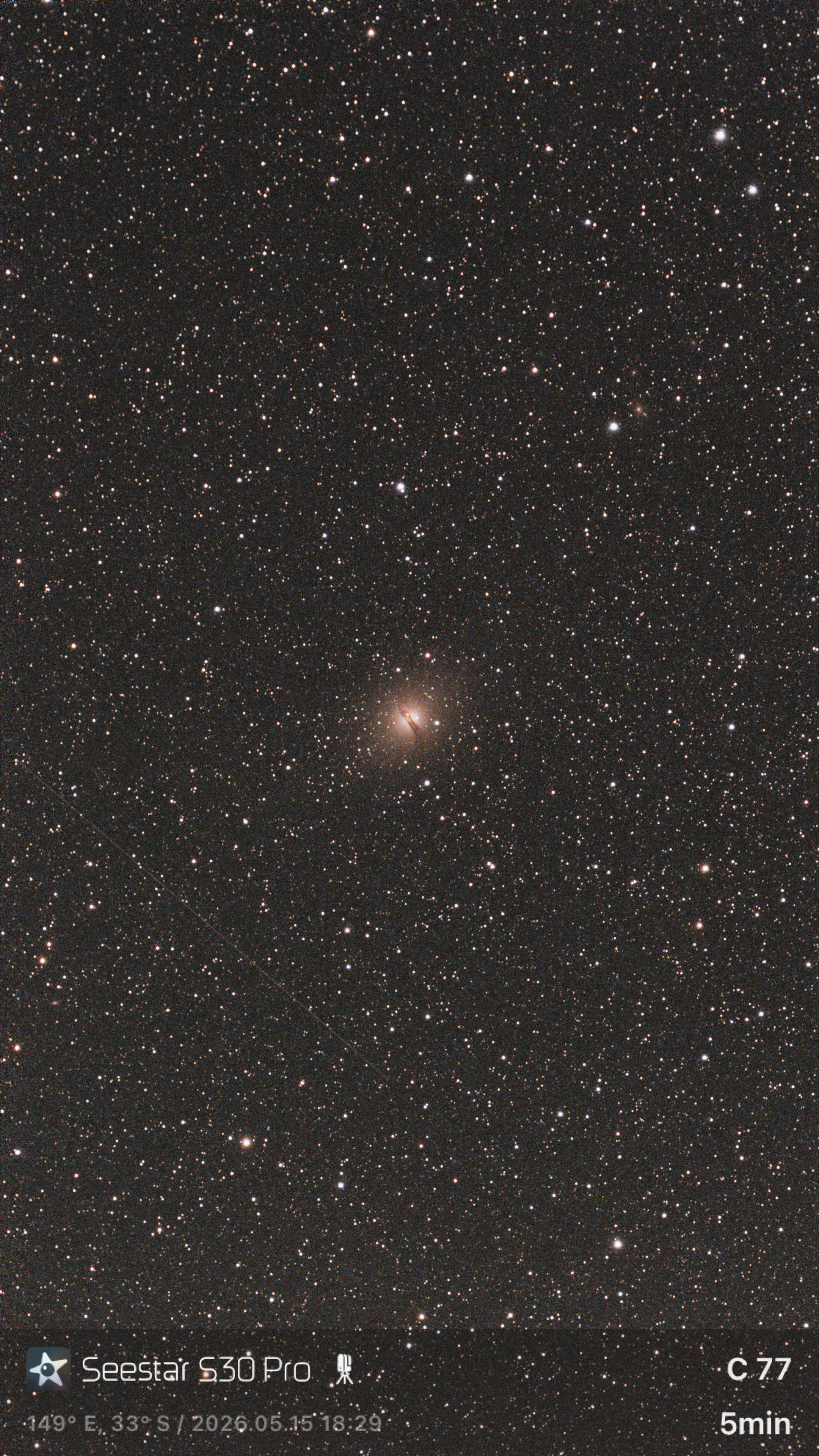
I recently purchased a Seestar S30 Pro from BINTEL here in Sydney – my best buy for a long time. It has been a lot of fun imaging the Southern skies using only the Seestar and my iPad. This is a great way for someone to start imaging stellar objects; it is not a replacement for visual astronomy, but if you want to start on the road to imaging this is a simple way to do it. Watch this space. I have the new Seestar S50 Pro on back order, hopefully arriving in October. It should be an interesting addition.
I've also developed a browser-based interface to the Seestar range of telescopes. It can control multiple scopes from a single session. I've yet to fully explore how to make best use of the new software. It's free to anyone who wants a copy.
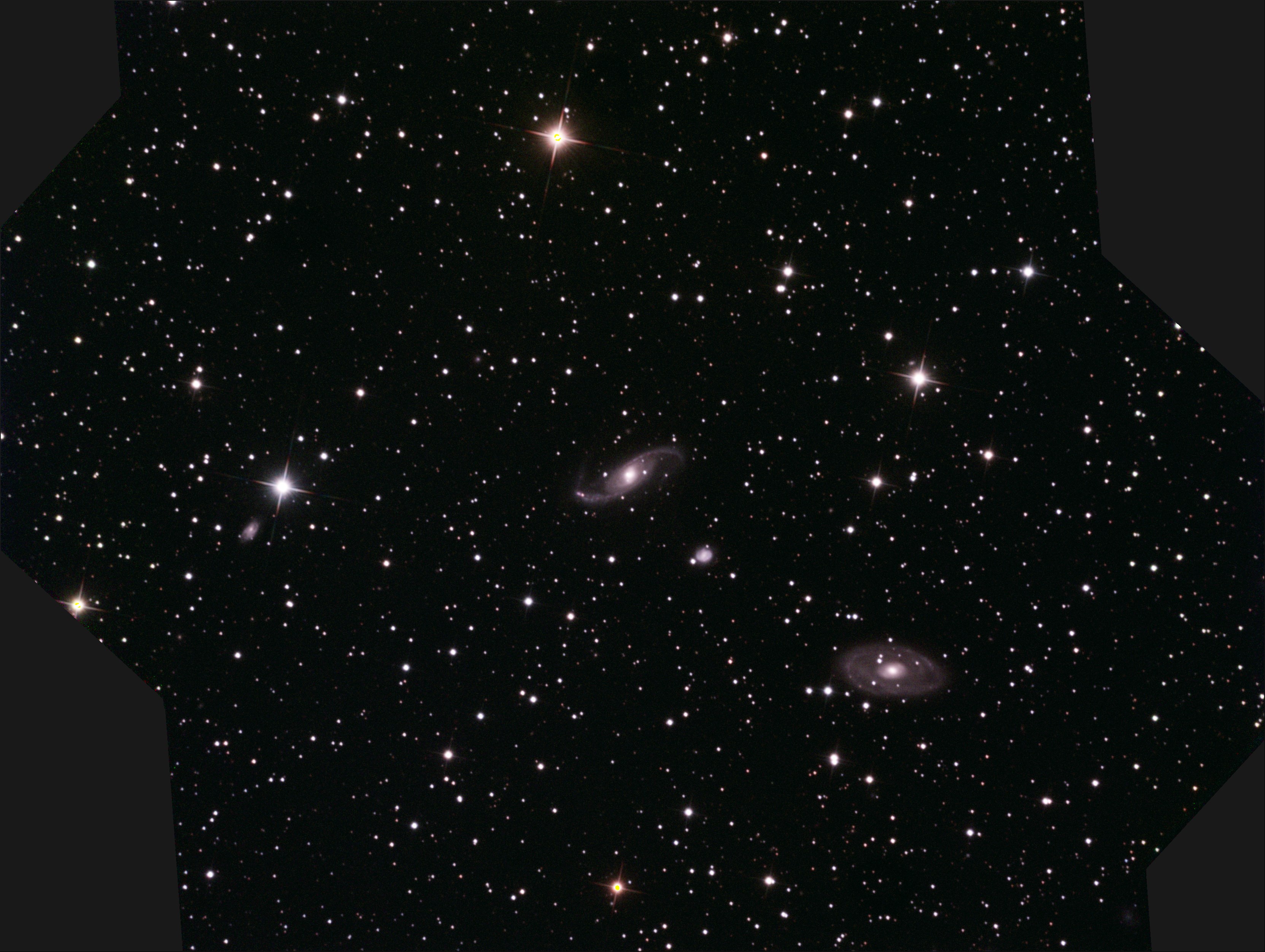
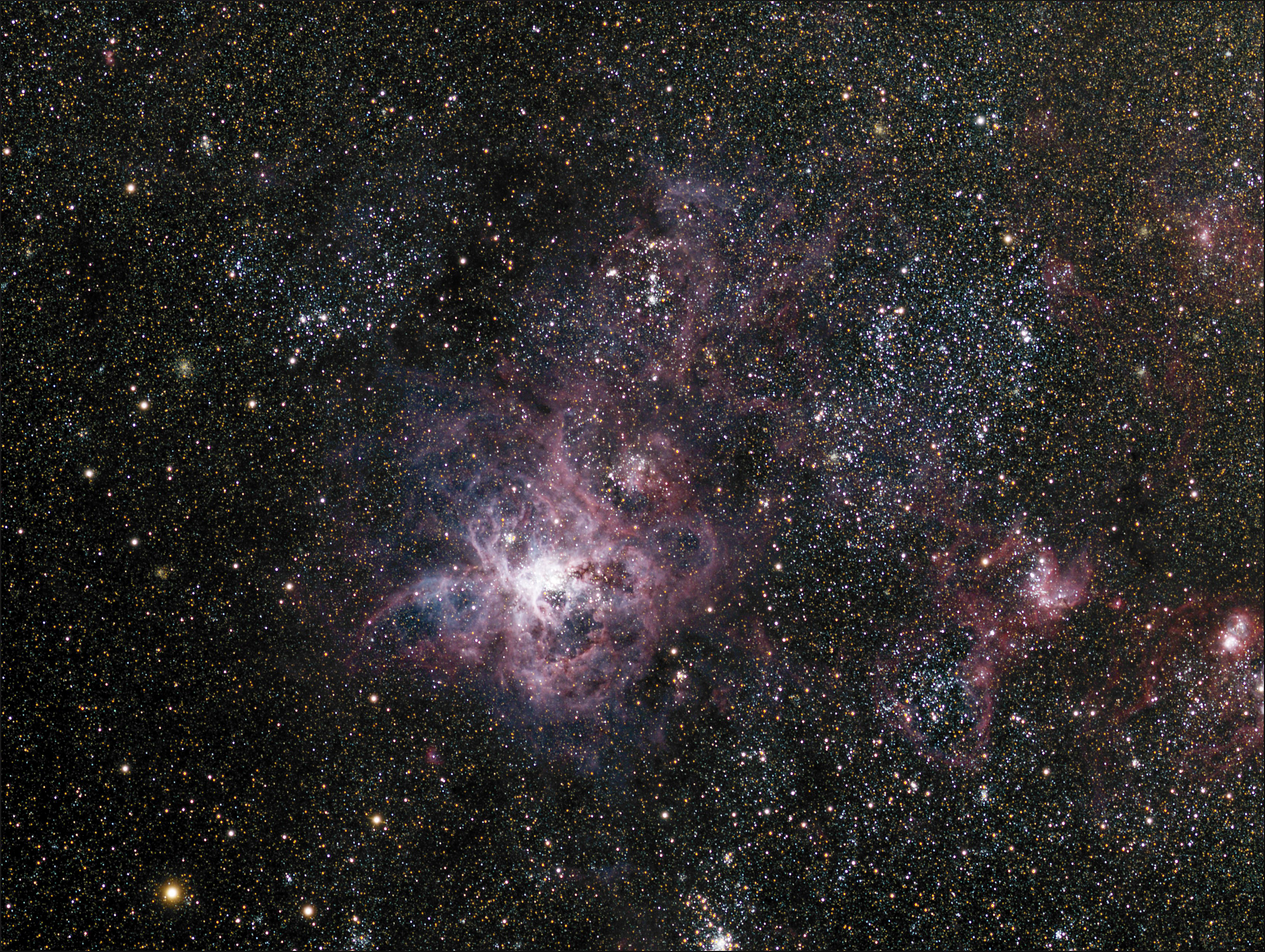
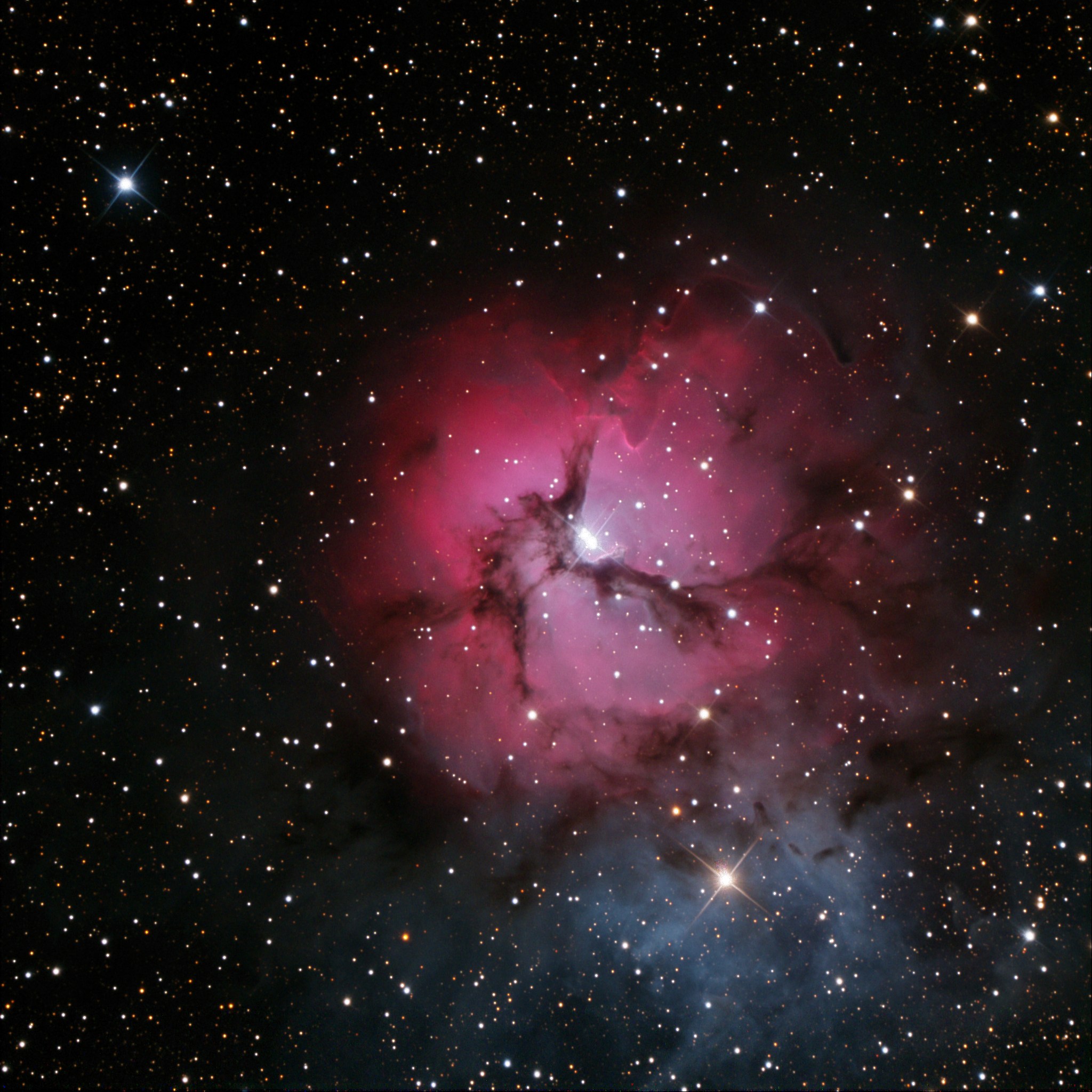
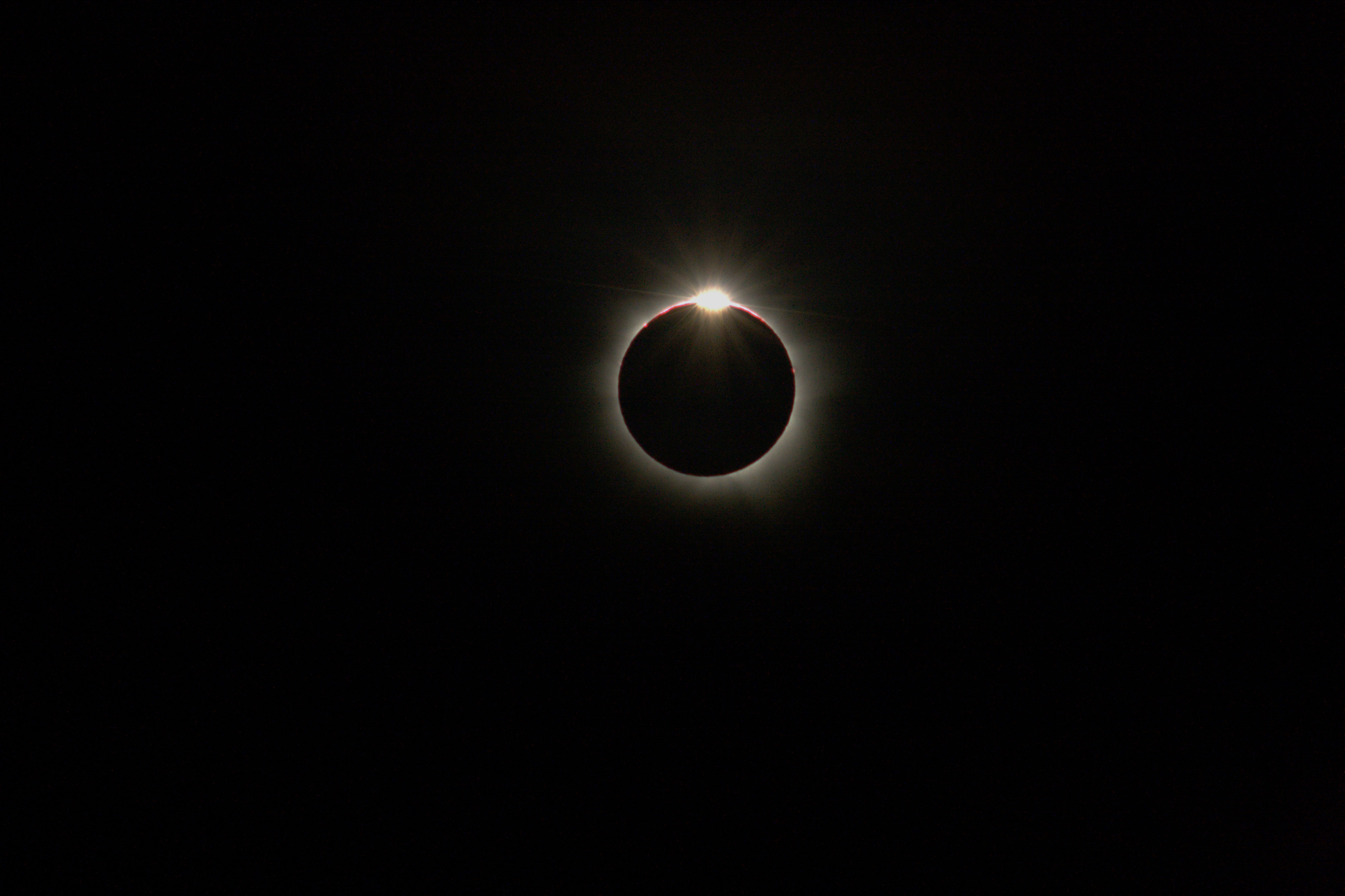
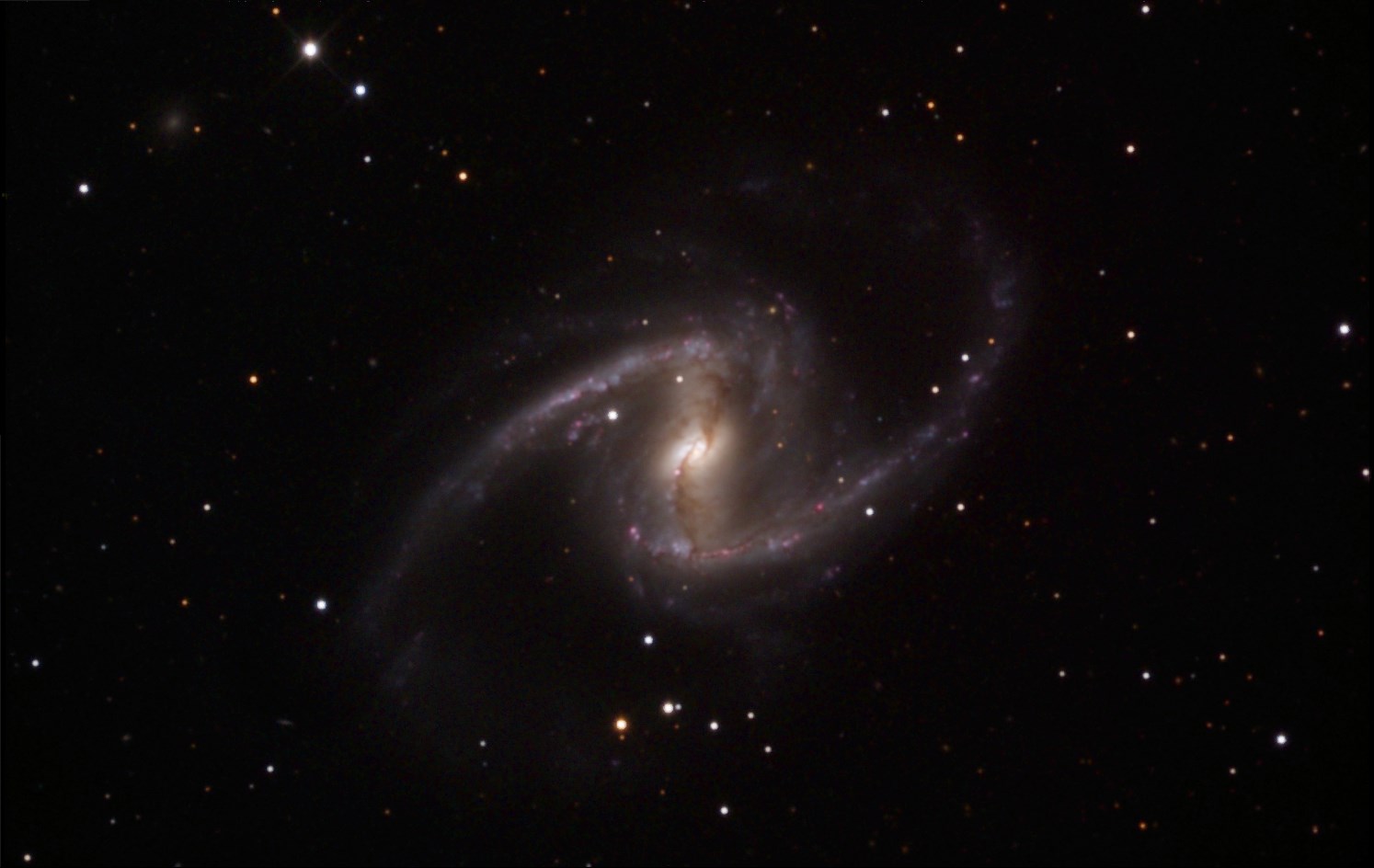
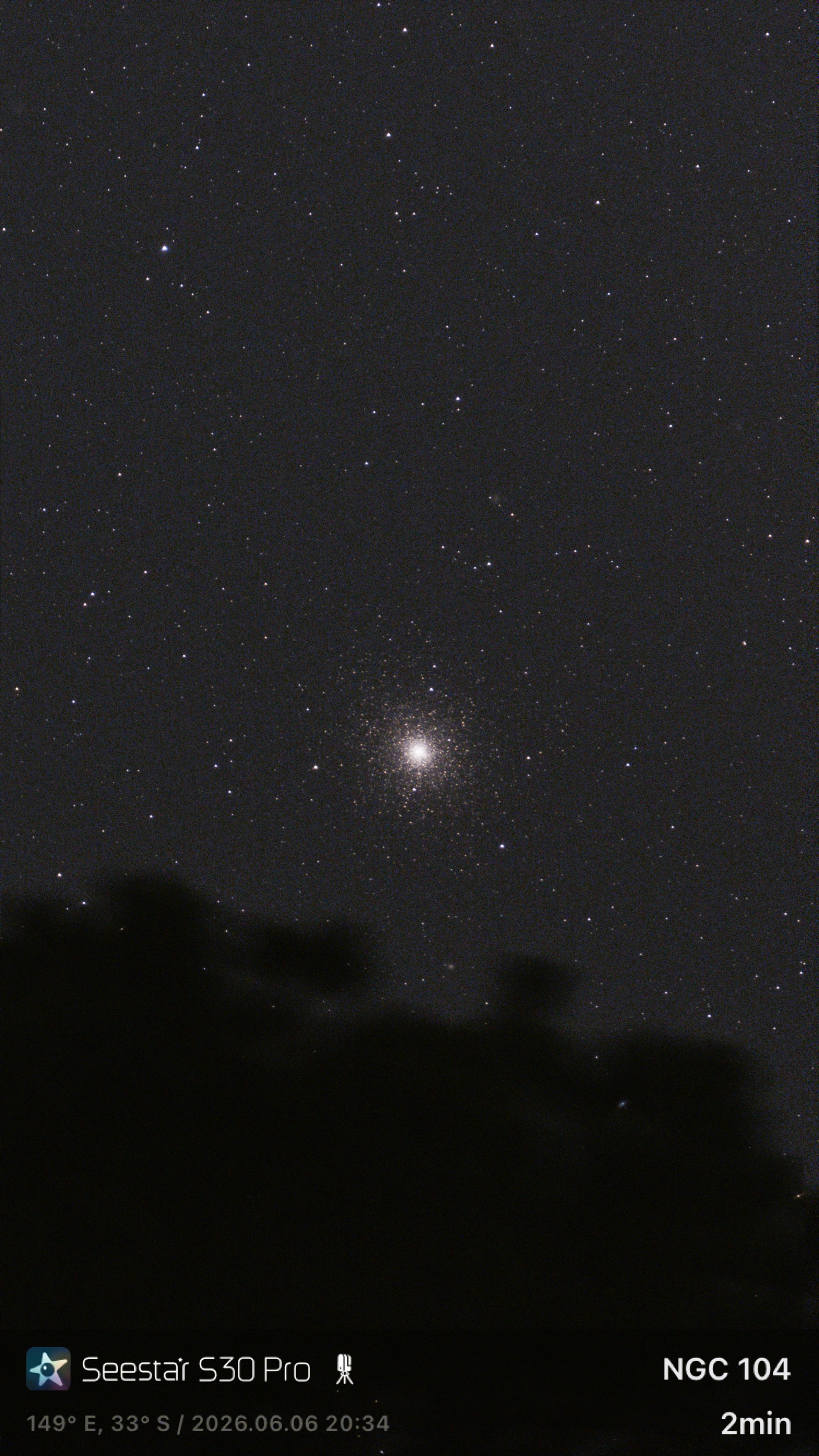
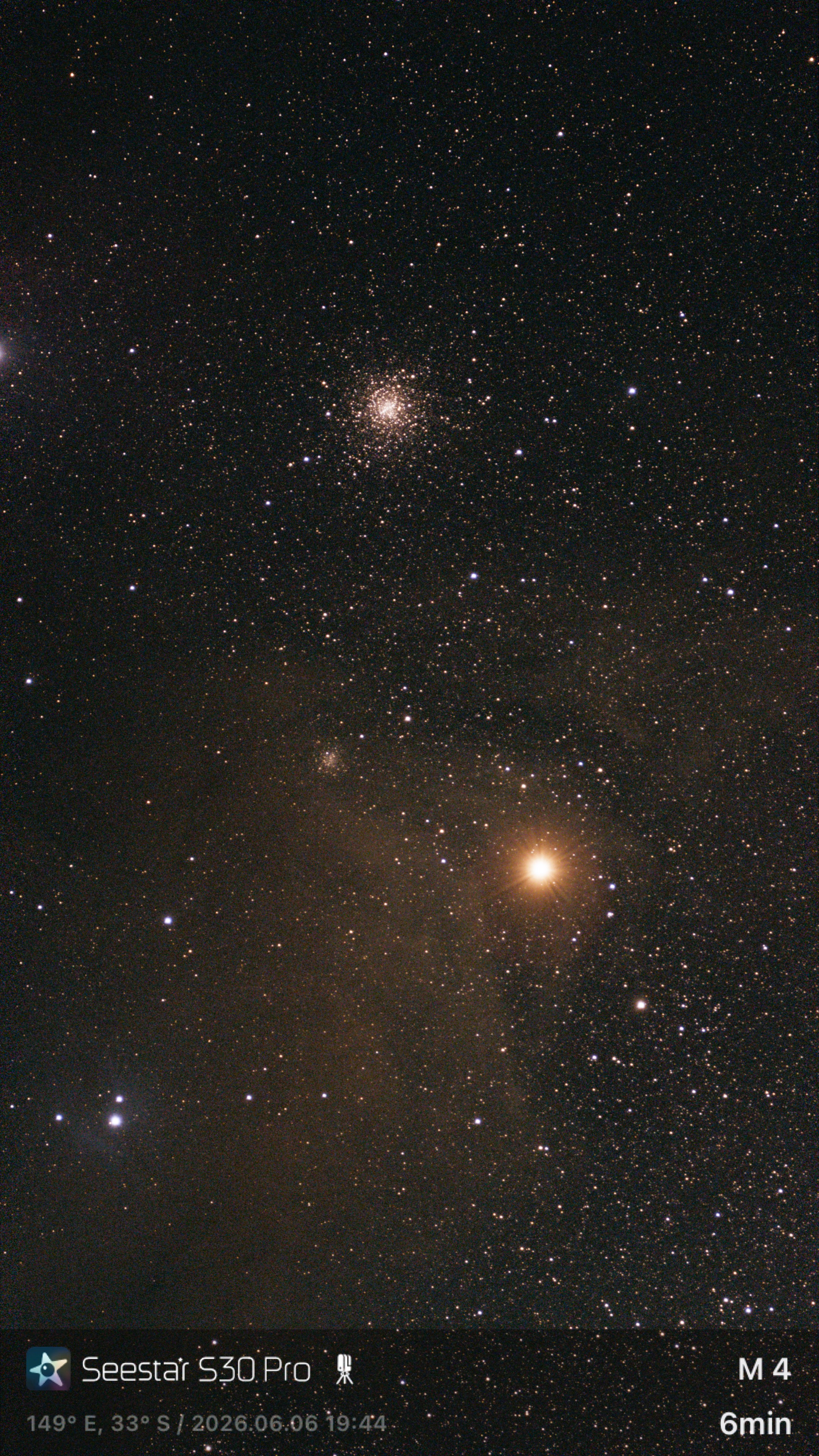
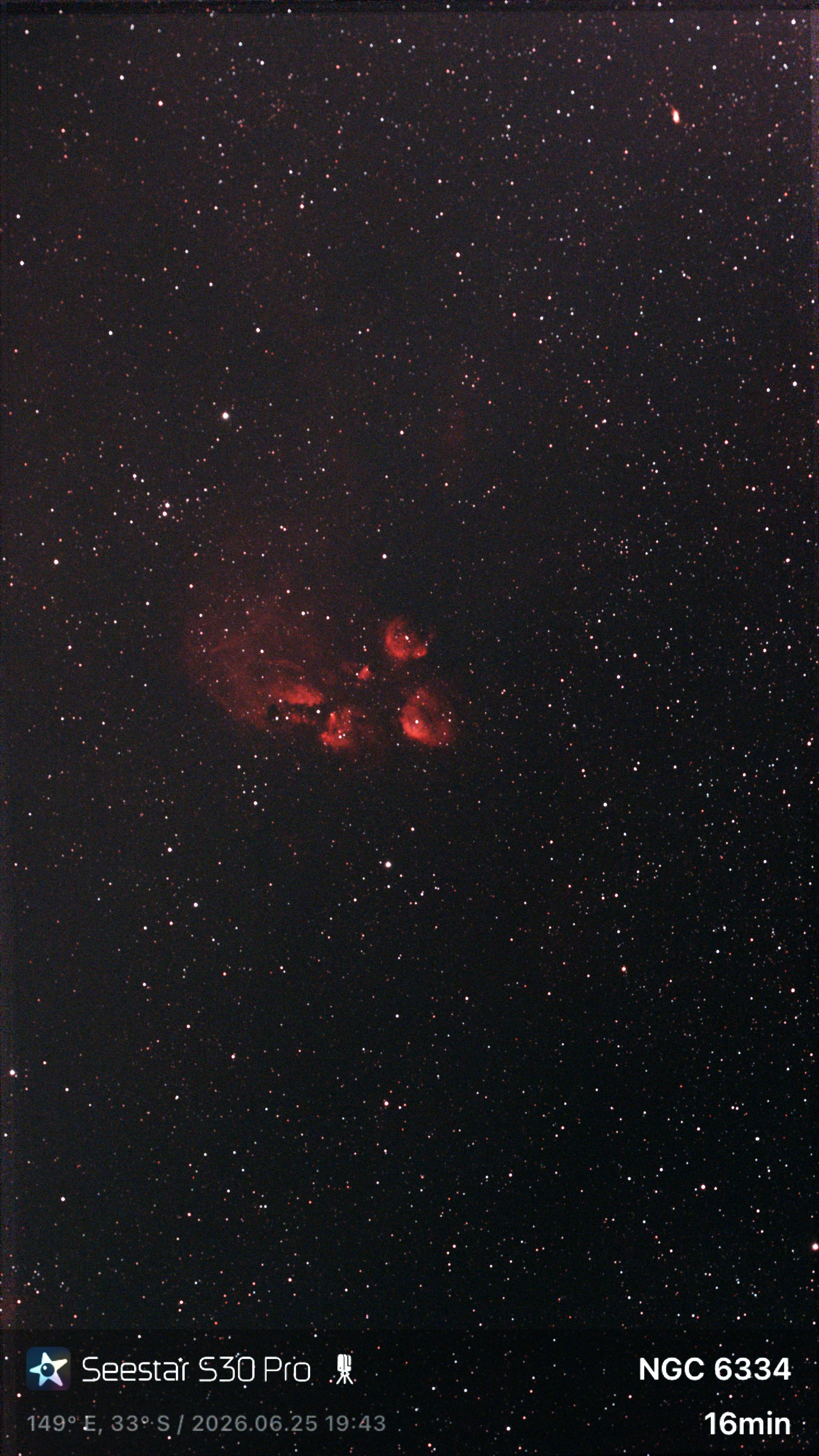
ngc3347 Galaxy Cluster MosaicNGC 3347 and its surrounding galaxy cluster inhabit the constellation Leo Minor, a region crowded with distant galaxies scattered across the void. The central elliptical galaxy dominates the frame, its smooth amber light a hallmark of its advanced age, whilst fainter spiral and lenticular companions orbit nearby in gravitational communion. Clusters like this one reveal how galaxies gather into gravitational hierarchies across the cosmos, their collective mass warping spacetime and binding them together across millions of light-years. This mosaic captures both the prominent members and the dimmer background galaxies that hint at the universe's vast population of stellar cities, layered one behind another in the depths of space.NGC2060 Tarantula Nebula DetailWithin the vast stellar nursery of the Tarantula Nebula in Doradus, a knot of glowing gas and young stars reveals the violent energy of star formation. This region, lying at the heart of the nebula's most luminous zone, glows with the characteristic red of hydrogen gas energised by ultraviolet radiation from massive newborn stars. The intricate filaments and dust lanes trace the turbulent flow of material as gravity continues to sculpt new suns from the cosmic cloud. The Tarantula Nebula itself stands as one of the most luminous and active stellar birthplaces visible to southern hemisphere observers, making this detailed view of its interior a window into the raw processes that build stars and shape galaxies.Centaurus A NGC 5128Centaurus A sprawls across the southern sky as one of the nearest giant elliptical galaxies, a cosmic collision frozen in time. Dust lanes carved from a past merger slice through its golden core, creating a striking dark cross that dominates the view. Jets of superheated material stream outward from a supermassive black hole at its centre, extending far beyond the galaxy's visible disc. This violent architecture—the warped dust, the energetic outflows, the chaotic star formation—tells the story of two galaxies that merged long ago, their black holes combining into the powerhouse that Centaurus A remains today.M20 Trifid NebulaThe Trifid Nebula spreads across Sagittarius like a cosmic flower, its three lobes separated by dark dust lanes that give it its striking name. This star-forming region glows with the red light of hydrogen gas energised by young, hot stars at its heart, while blue reflection nebulae fringe its edges where starlight bounces off cooler dust clouds. The interplay of bright emission, shadow, and colour reveals the violent creativity of stellar birth—a place where gravity collapses gas and dust into new suns, tearing and sculpting the surrounding material in the process. To the naked eye it remains invisible, but through binoculars or a modest telescope, this region transforms into one of the most visually rewarding deep-sky targets in the southern sky.Solar Eclipse 2012A rare alignment of moon and sun creates one of nature's most arresting spectacles. This image was tkaen during the total eclipse in 2012 from around Cairns. During a total solar eclipse, the lunar disc slides directly in front of the sun, plunging day into twilight and revealing the sun's ethereal corona—that ghostly halo of plasma normally hidden by the sun's blinding surface. For those in the narrow path of totality, the experience is transformative: stars emerge in daytime, temperatures drop, and the corona's delicate structure becomes visible to the naked eye. This brief celestial choreography has captivated observers for millennia, blending science and wonder in a way few astronomical events can match.NGC 1365 Great Barred SpiralNGC 1365, the Great Barred Spiral in Fornax, ranks among the finest examples of its kind—a galaxy whose architecture is laid bare across the night sky. The dominant bar of stars and dust stretches across the galactic centre with striking clarity, funnelling material inward and sculpting the spiral arms that unfold like a cosmic whirlpool. The warm amber and cream tones reveal the galaxy's stellar populations, whilst dust lanes carve dark threads through the structure. Such barred spirals fascinate astronomers because the bar's gravity actively shapes how the galaxy evolves, driving gas toward the core and fuelling star formation in unexpected ways. From the Southern Hemisphere, this galaxy offers a portrait of gravitational architecture at work.NGC 104 47 Tucanae47 Tucanae sits in the constellation Tucana and ranks among the brightest globular clusters visible from Earth's southern hemisphere. This dense, roughly spherical swarm of ancient stars orbits our galaxy and contains millions of suns packed so tightly that near its centre they seem almost to touch. The cluster glows with a warm, golden hue from its population of old, cool stars. Despite sitting at a considerable distance, its stellar density and luminosity make it an unmissable sight through binoculars or a telescope, a sphere of starlight that rewards closer inspection with hints of colour and subtle structure across its face.M4 and AntaresMessier 4 sprawls across the southern reaches of Scorpius, nestled close enough to the brilliant star Antares to share the same telescopic field of view. This globular cluster contains tens of thousands of stars packed into a sphere, yet it wears its crowding loosely—the outer stars remain distinct enough to resolve individually, giving it a grainy, almost porous appearance compared to denser neighbours. Its proximity to Earth and relatively loose structure make it one of the most rewarding globular clusters to explore through modest equipment. The ruddy giant Antares, which lends its name to the scorpion's heart, provides a striking colour contrast: where Antares burns orange-red, the ancient stars of M4 shimmer in cooler tones, a reminder that this cluster has been circling the galactic centre since before our Sun was born.NGC6334 Cats Paw NebulaThe Cat's Paw Nebula, sprawling across Scorpius, is a vast stellar nursery where gravity is actively sculpting gas and dust into new stars. Named for its distinctive shape—claw-like fingers reaching across the sky—this emission nebula glows in shades of red and orange as ultraviolet radiation from embedded hot young stars ionises the surrounding hydrogen. Within its structure lie dense stellar clusters still shrouded in their birth clouds, invisible to optical telescopes but active in infrared light. The nebula's turbulent landscape reveals the messy, dynamic process of star formation, where clumps of material collapse under their own weight whilst powerful stellar winds and radiation carve out cavities and pillars. It stands as a powerful reminder that the universe is constantly reshaping itself.MoonA test image of the moon. A great imaging target
Australian amateur astronomers have spent years at Ice in Space – it's been home for many of us. Worth a look if you're starting out, or already deep in it.